
Buzzworthy
Materials, Project
“Where we start to move forward is when we learn to ask questions which are less concerned with ‘Are you like us?’, and more interested in ‘What is it like to be you?’”
– James Bridle // Ways of Being; Animals, Plants, Machines; The Search for a Planetary Intelligence
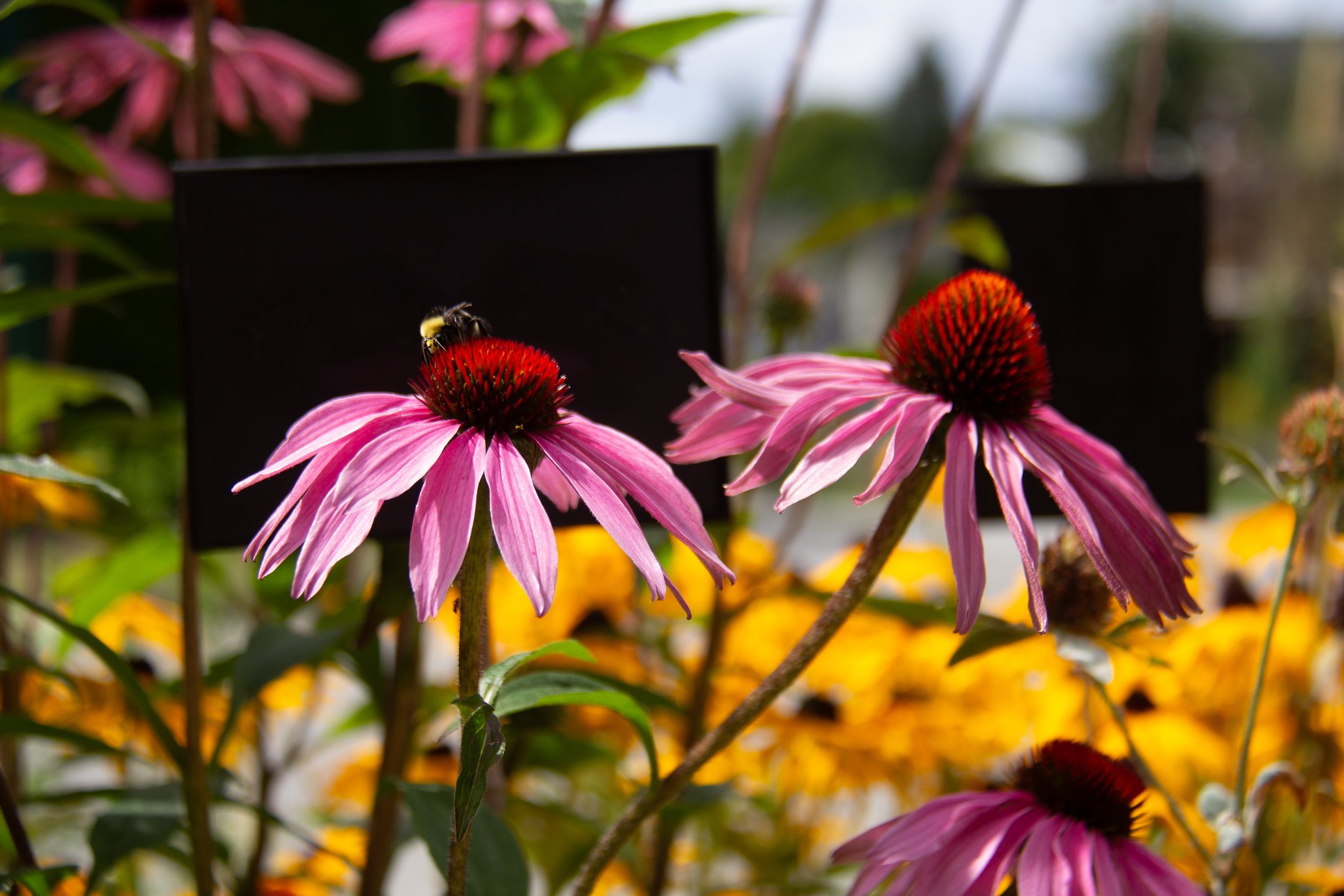
The hubris of western humanity supposes that all non-humans lack sentience, unless proven otherwise. Yet, in order to be bestowed sentience, by humans, non-humans must pass specific tests designed on the foundations of the human understanding of intelligence. The most notable test being the ability to recognize oneself in the mirror, such as the legal case brought forth on behalf of Happy the elephant, which would have granted Happy personhood - ie. the rights of a human over their own body. The technologies, frameworks, and metrics used all direct towards human-centered qualifications, which then inform how humans are expected to relate to the non-humans around us - hierarchically and managerially. Happy passed, but our willingness to bend stymied her case in the courts. A recent surge of writing has taken the idea of what intelligence looks like to task, and demonstrates that the extension of sentience is seeping from the most charismatic and relatable animals, such as elephants and dolphins, down through the less accessible entities such as plants that learn from their surroundings, forests that communicate and share resources, and even technologies that adapt to their own umwelt. Of the insect world, one could argue that (bumble)bees are the most relatable - the silly, cuddly pandas of the pollinators. And in line with those human-centered metrics, studies of bees have been shown that they play with balls, dance to communicate, and shake their heads in disgust upon tasting something undesirable. This project asks, through bees, if our nonhuman brethren are increasingly demonstrating they contain rich inner-life worlds specific to their own existence, can we humans change our mindset to one of humble not-knowing? One that instead assumes sentience until proven otherwise, and extends that assumption beyond mere existence to include joy, curiosity, frivolity, and even culture?
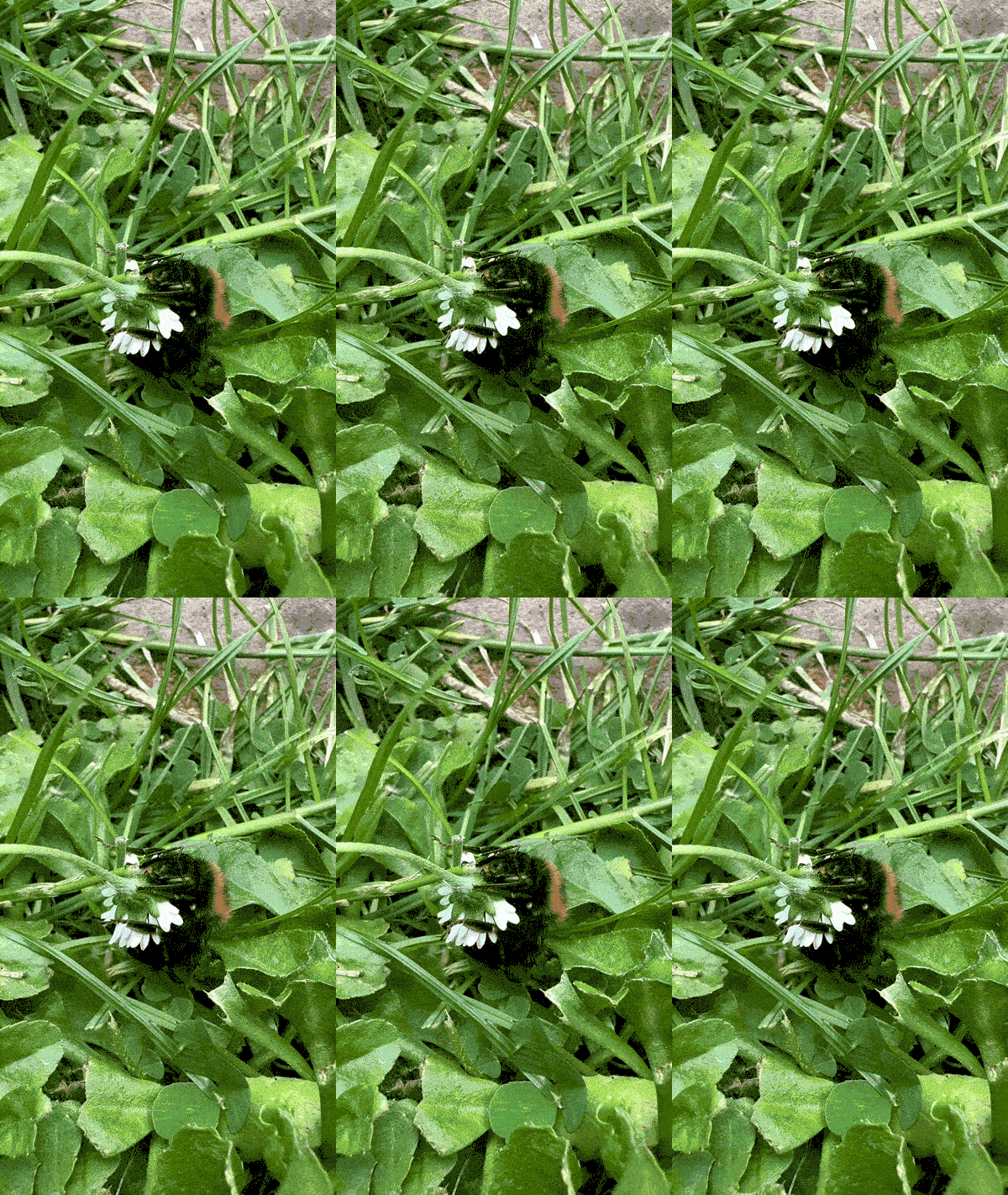
@bottomlockcottage
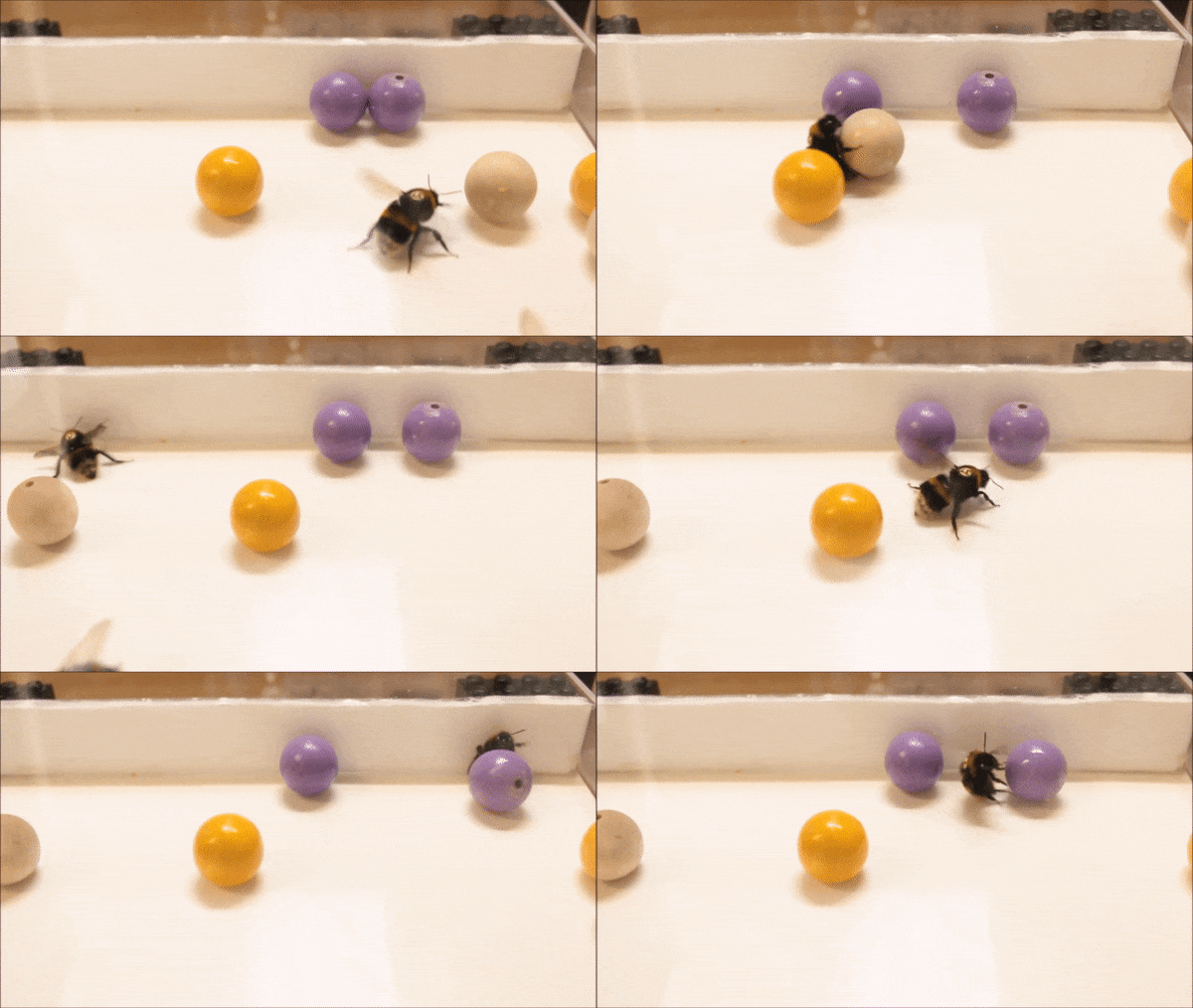
Scientific American
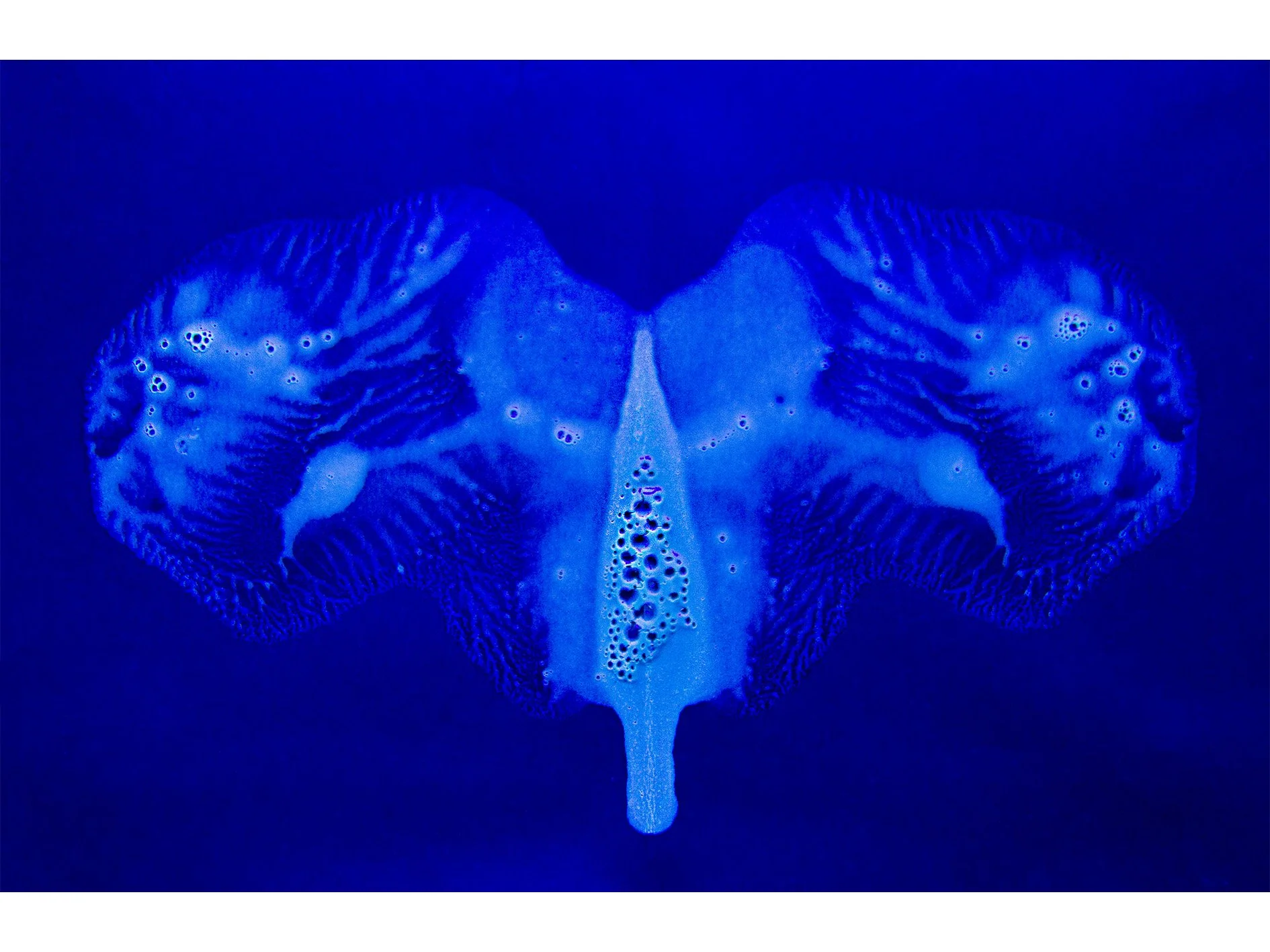
Buzzworthy is a speculative project that explores ideas of nonhuman culture. Building from my past material research residency Play in Process, UV-fluorescent art installations were made into a gallery for only the bees to enjoy (or not). As the UV fluorescent wavelength is imperceptible to humans, this body of work aims to decenter the assumed human hegemony over aesthetic expression and appreciation. Like the human experience of art, the bees may like or dislike it, or perhaps it fades into their background. Further, the bees may experience the art in means as yet unknown to us. The quandary lies in the production of the art itself, which was produced by humans with a limited knowledge of even the basic patterns of a bee’s daily life. To lay the foundation, a local bee expert was invited to share their knowledge, and co-speculate on a day in the life of a bee.
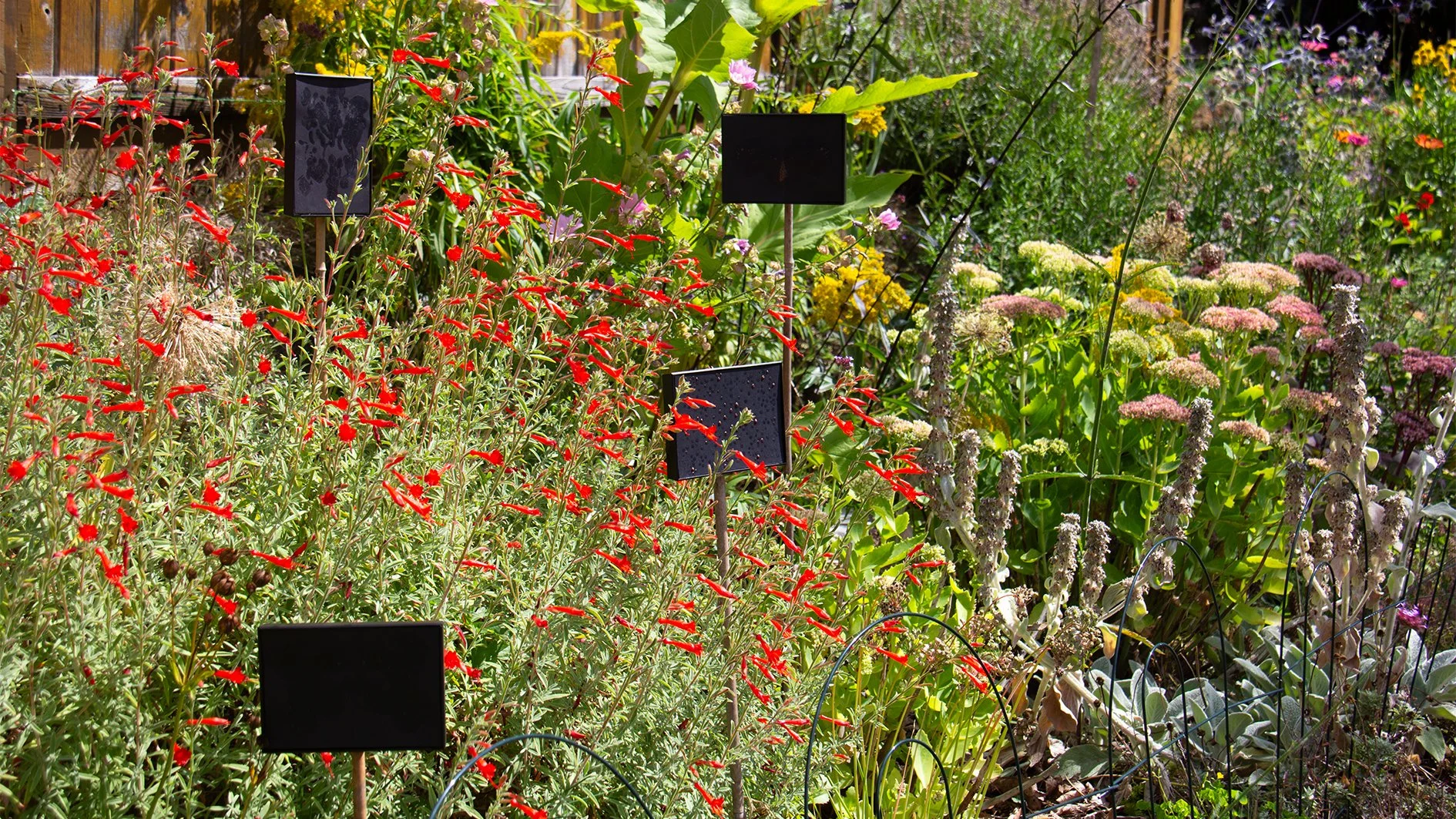
Even in the mechanics of sight, bees perceive the world vastly differently than that of a human. The compound eyes of a bee allow for an enhanced sensitivity to motion, but between those eyes exists a blind spot which influences their side-to-side motion in flight. The 3 simple eyes atop a bee’s head provide reference to maintain a level flight, and calculate the remaining daylight by the polarized sky. Bees can be described as nearsighted and perceive significantly less detail than humans. Yet, bees perceive a hidden world of patterns and shape in the ultraviolet range of wavelengths, which are invisible to us without the mediation of technologies. These patterns and shapes are said to act as targets or landing strips, where the flowers induce pollination through directing the bees to their nectar. While some species exhibit strong UV markings, others are more subtle or without. It is posited that an art gallery for bees installed amongst weaker-marked flowers may also assist in alerting bees to potential food sources, and encourage the pollination of that particular plant.
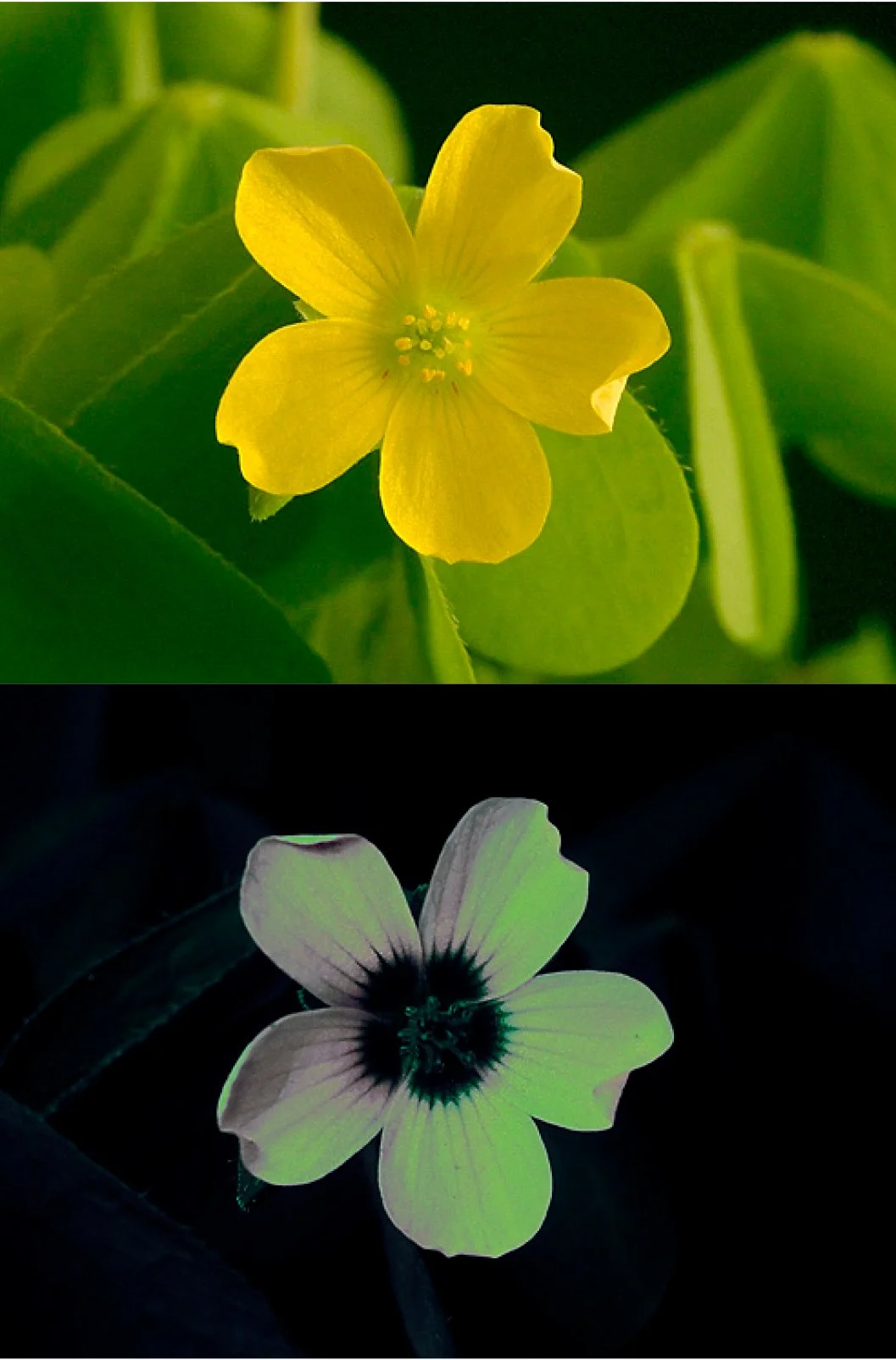
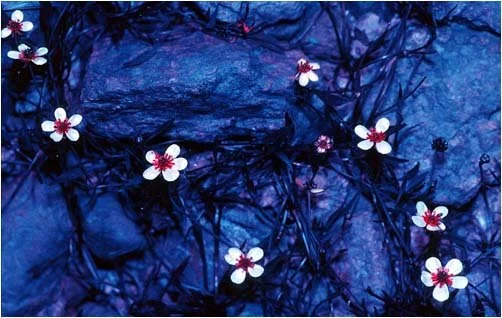
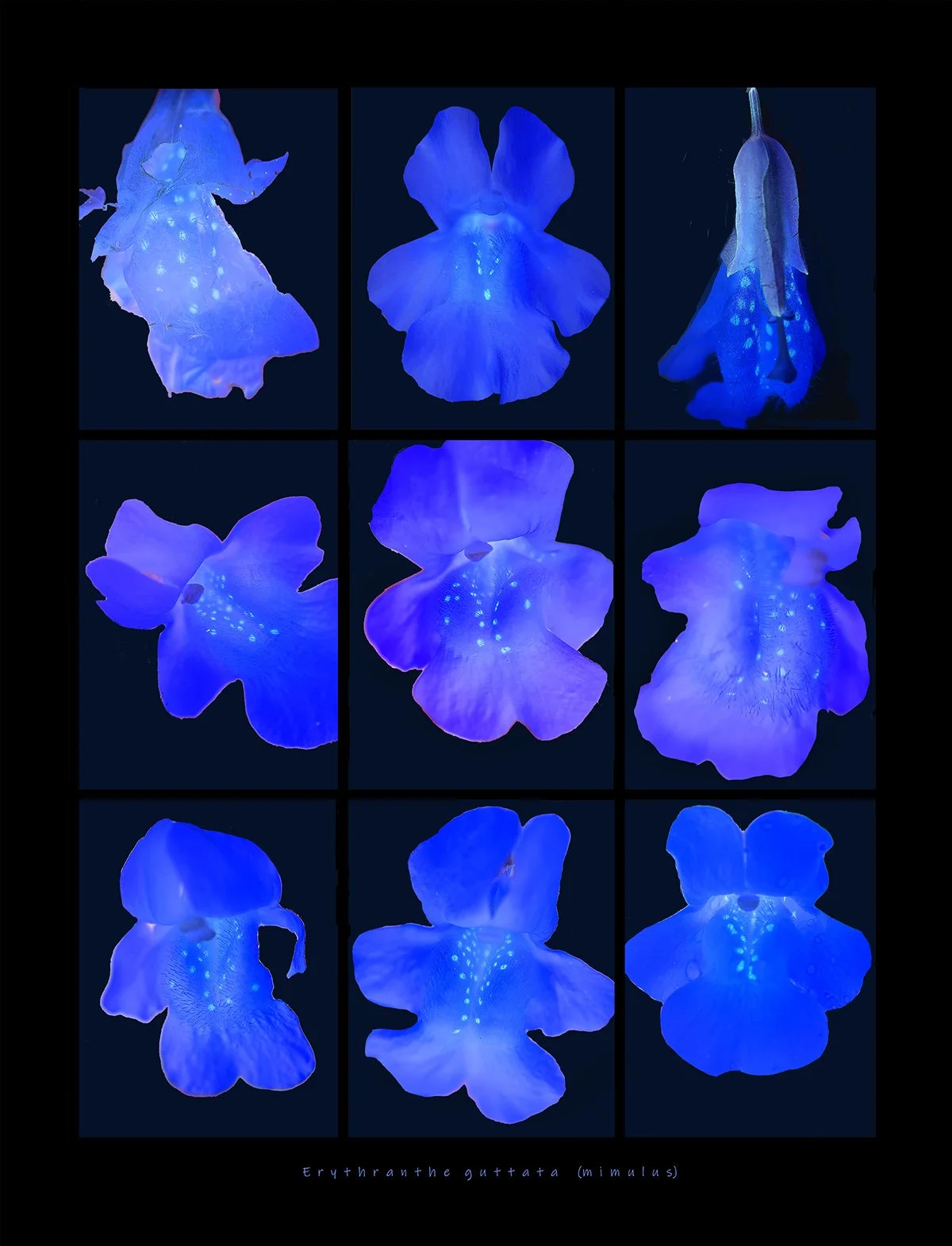
This project began with the collection of branches of the common horse chestnut tree (Aesculus hippocastanum), within which there exists a substance that fluoresces upon exposure to ultraviolet light. This extracted substance was then added to an egg tempera paint recipe, a type of bio-based paint that has been in use since early Egypt through to Renaissance times. Participants were then invited to create works of art from this paint that they believed bees might by intrigued by, keeping in mind the means by which bees perceive the world, and through conjecture of limited human understanding of a bee’s existence. Joined by my young nieces, friends, and certified artists, it became clear that there exists a collective blind-spot in the logistical world of a bee, let alone emotional, fed by false or limited understandings when compared to the knowledge shared by the bee expert. Across the board, it was difficult to access a positionality that moved away from the human’s, and the patterns and forms chosen demonstrate the limits of this understanding.
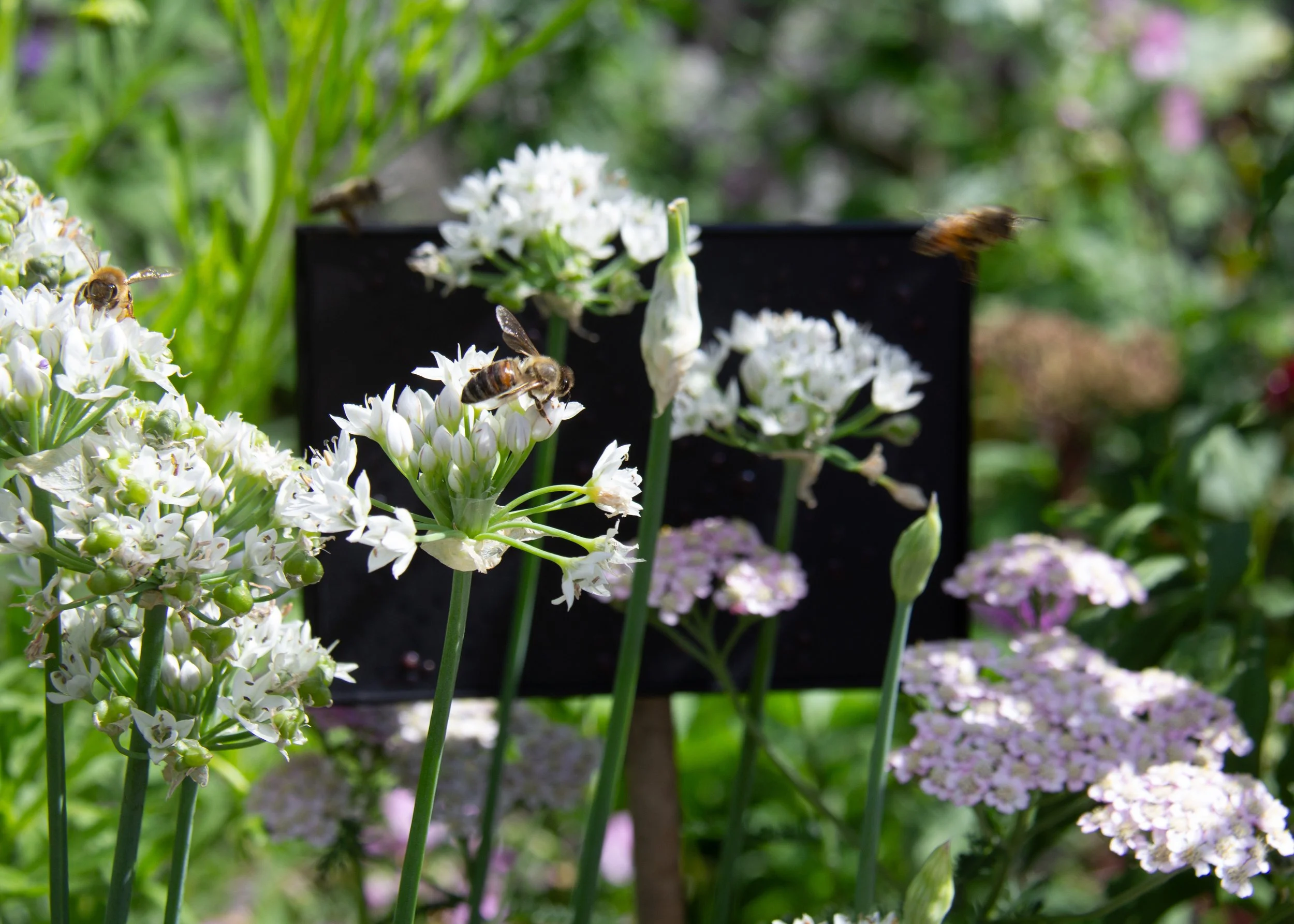
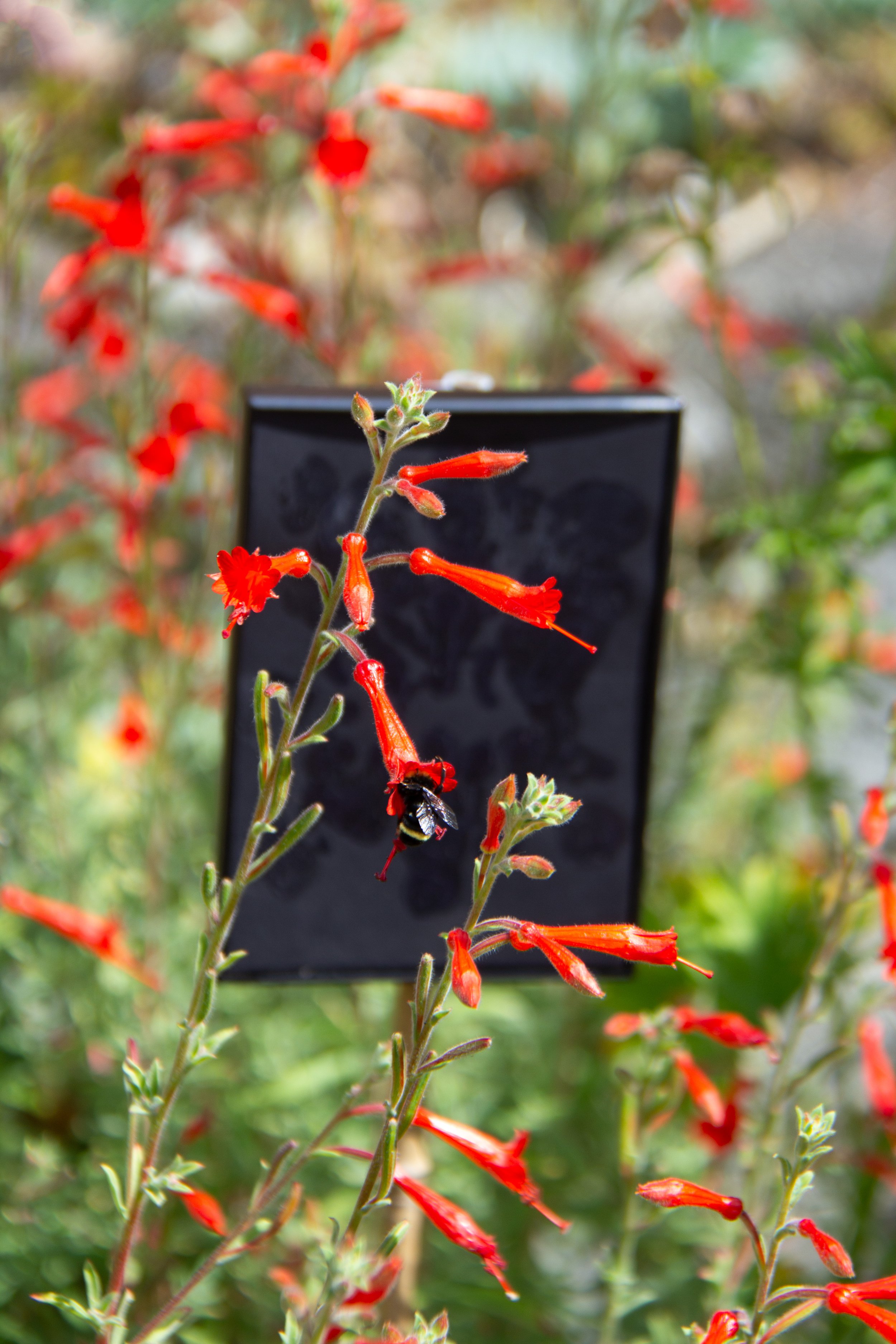
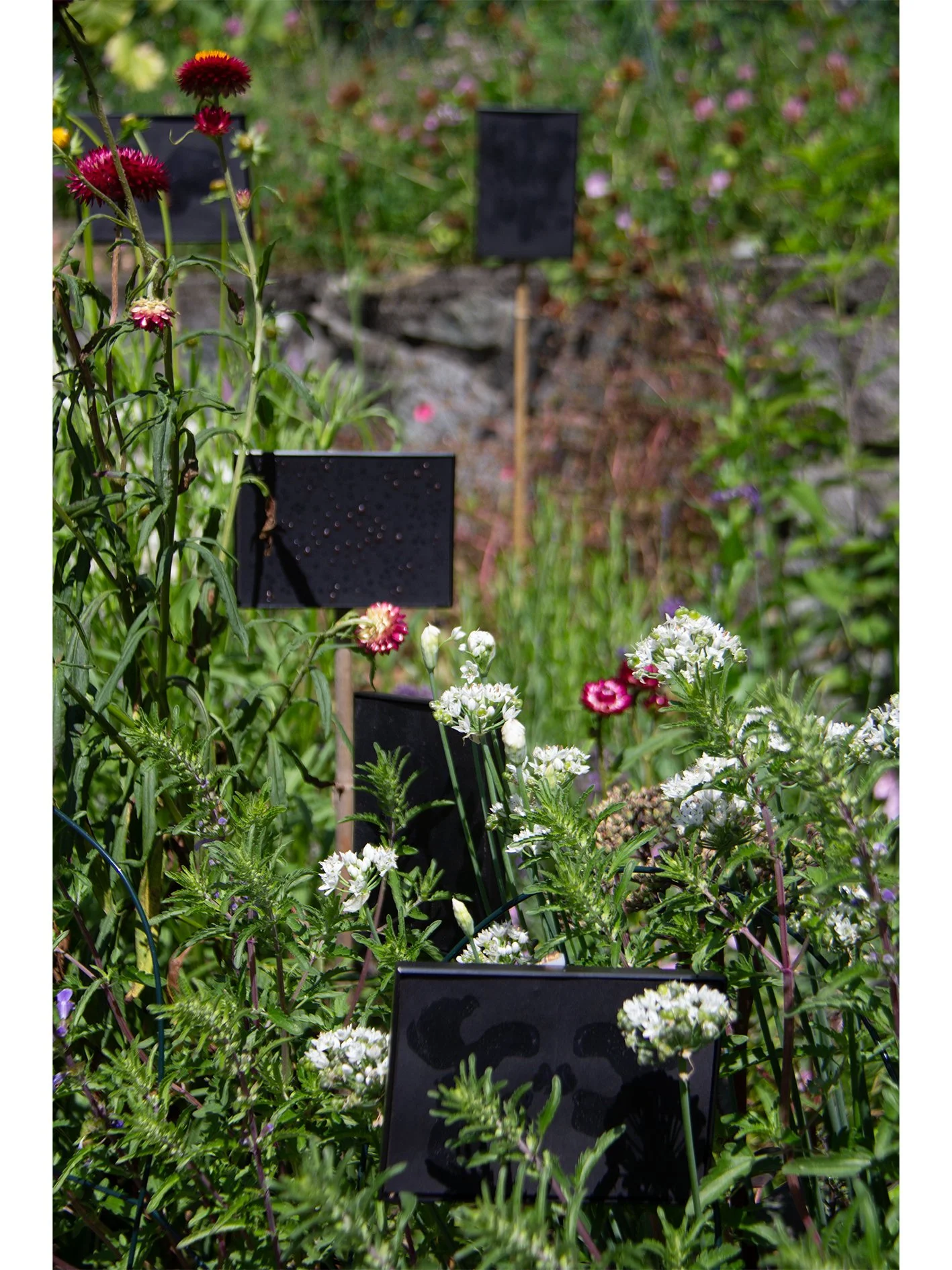
Through the making, participants reflected on previously unconsidered elements of a bee’s lifeworld. Such questions arose as - do they consider other insects? Do bees have friends? Do bees understand the ocean? Do bees have time to notice art? While these questions cannot be fully known from a human perspective, what this project accomplished was bringing together a diverse cohort of humans who care about bee well-being, expressed through various means. This includes the bee expert/advocate, a teacher who discusses pollination in the classroom, a neighbour who lent her bee-garden boulevard for documentation, their neighbour who tends to the garden, my young nieces who spoke of bee families, and an adult artist. All shied at pretending to be a bee, further demonstrating the limits of our embodiment of nonhuman experiences. Whether we can access those experiences or not is not of relevance. What this project asks is instead of assuming there to be a void in those areas that we cannot know from a human perspective, can we assume that each life is as rich and layered as our own until proven otherwise?
-
(Some) References
1. James Bridle. 2022. Ways of Being: Animals, Plants, Machines: The Search for a Planetary Intelligence. Penguin Books Limited.
2. Grace van Deelen. 2023. Ball-Rolling Bumble Bees Just Wanna Have Fun. Scientific American. Retrieved October 3, 2026 from https://www.scientificamerican.com/article/ball-rolling-bumble-bees-just-wanna-have-fun/
3. Zoë Schlanger. 2024. The light eaters: how the unseen world of plant intelligence offers a new understanding of life on Earth. Harper, an imprint of HarperCollins Publishers.
4. Science Magazine. 2023. Honey bees perfect their waggle dances by learning from elders. Retrieved October 3, 2026 from https://www.youtube.com/watch?v=Cylim87fFgU
5. S. Simard. 2021. Finding the mother tree: discovering the wisdom of the forest. Alfred A. Knopf, New York.
6. 2026. Bees lick lips or shake head to show if they like or dislike food. BBC Newsround. Retrieved October 3, 2026 from https://www.bbc.co.uk/newsround/articles/cly857yqe82o
7. New studies suggest consciousness exists in organisms without brains | Natalie Lawrence » IAI TV. Retrieved October 3, 2026 from https://iai.tv/articles/new-studies-suggest-consciousness-exists-in-organisms-without-brains-auid-3597
This project was initiated and supported by the Sculpture Placement Group in Glasgow, Scotland.